Shovels and spades
Models, stamp, socket angle and blade width
Shovels and spades come in all kinds of models. Depending on the application or region, a certain shovel or spade is commonly used. A shovel or spade is marked with a code, the so-called stamp. This stamp provides information about the socket angle and blade width of the shovel or spade. Thanks to this code, people know exactly which shovel or spade they need and for which tasks.
Read more below about:
Shovel and spade models
The terms shovel, spade, and scoop are sometimes used interchangeably, often for the same type of tool. This is sometimes region-specific or stems from a dialect. When people talk about a shovel or a spade, they are almost always referring to the same tool. For example, a Drents model spade is the same as a digging shovel and as a pan shovel. A Hollands model spade refers to a scoop shovel, which is also called a sand shovel. The term scoop is more of a collective name for various shovels and spades. Scoop can also refer to a ballast shovel or grain shovel.
Below are a number of commonly used models.
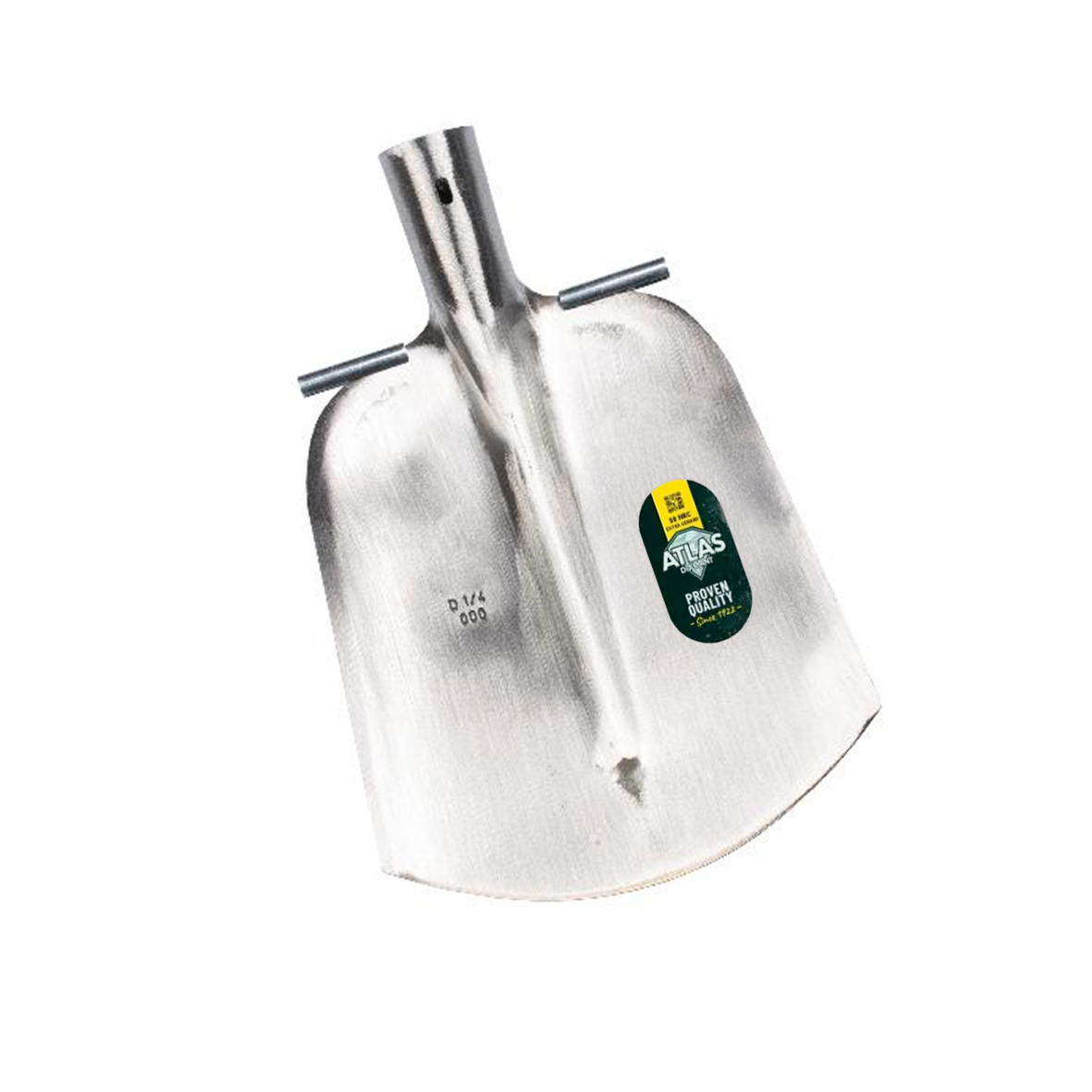
Digging shovel
Drents model spade
Pan shovel
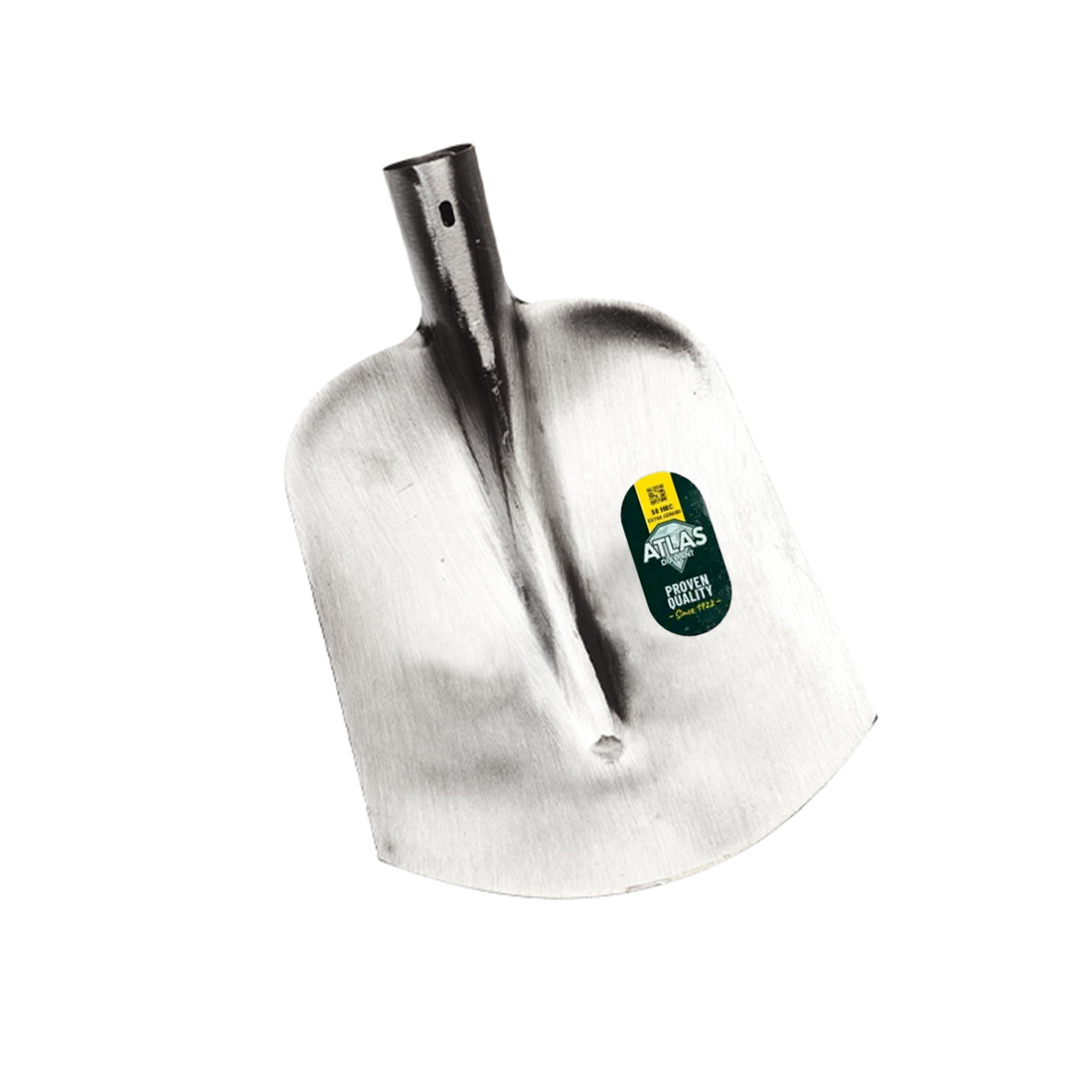
Scoop shovel
Hollands model spade Sand shovel
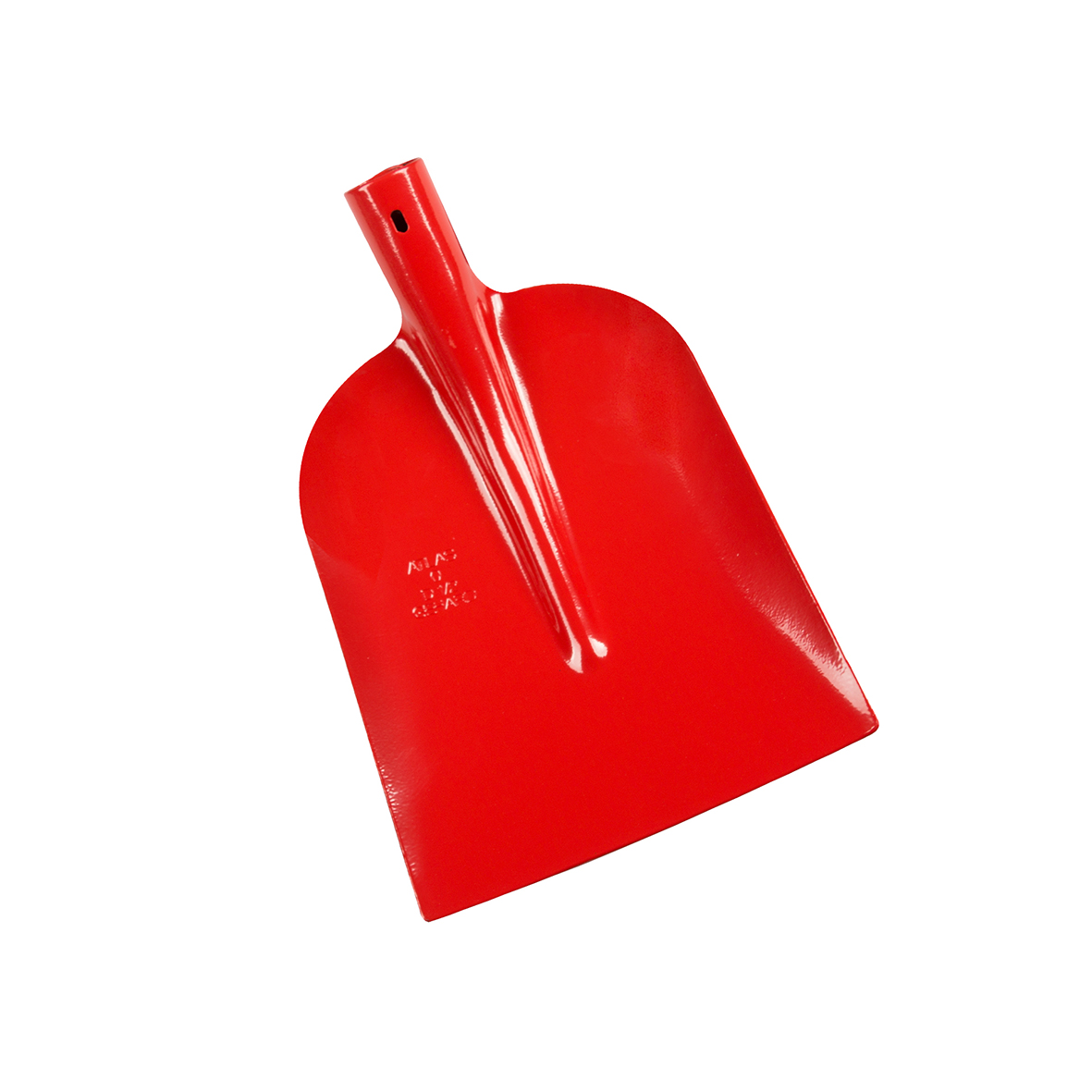
Concrete shovel
Holsteiner shovel
Screeding shovel
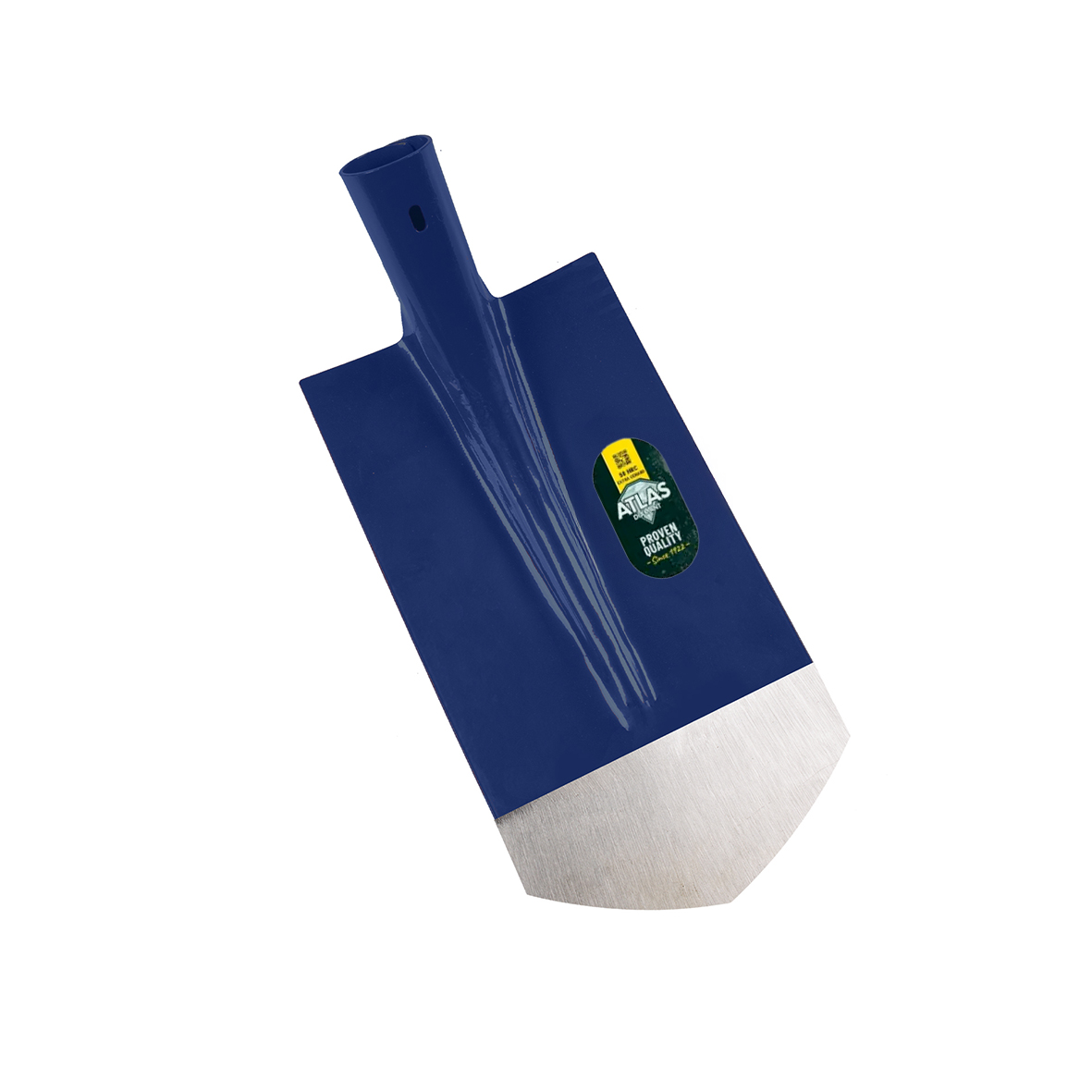
Cable shovel
Deep shovel
Small banana shovel
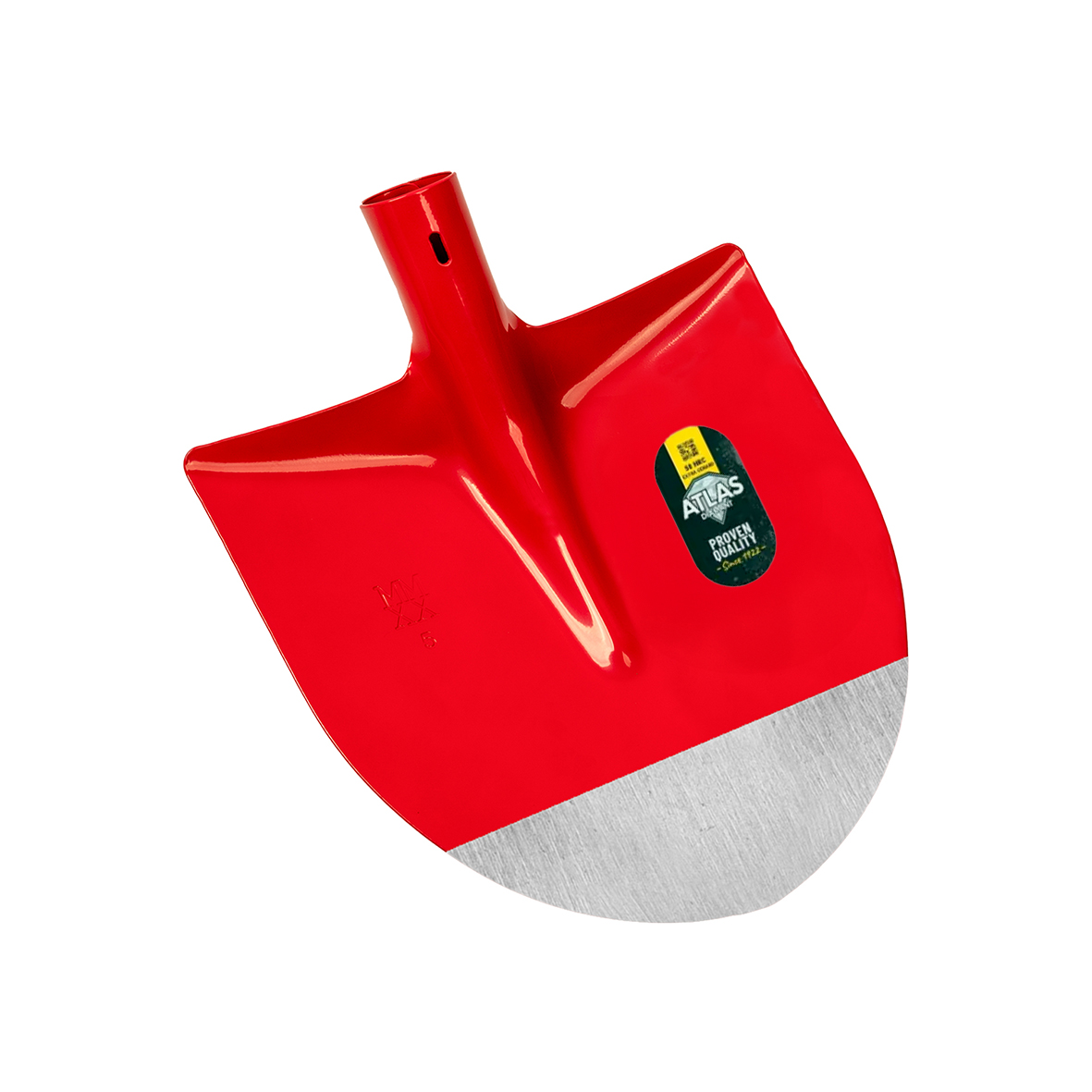
Frankfurter
German shovel
Stamp shovels and spades
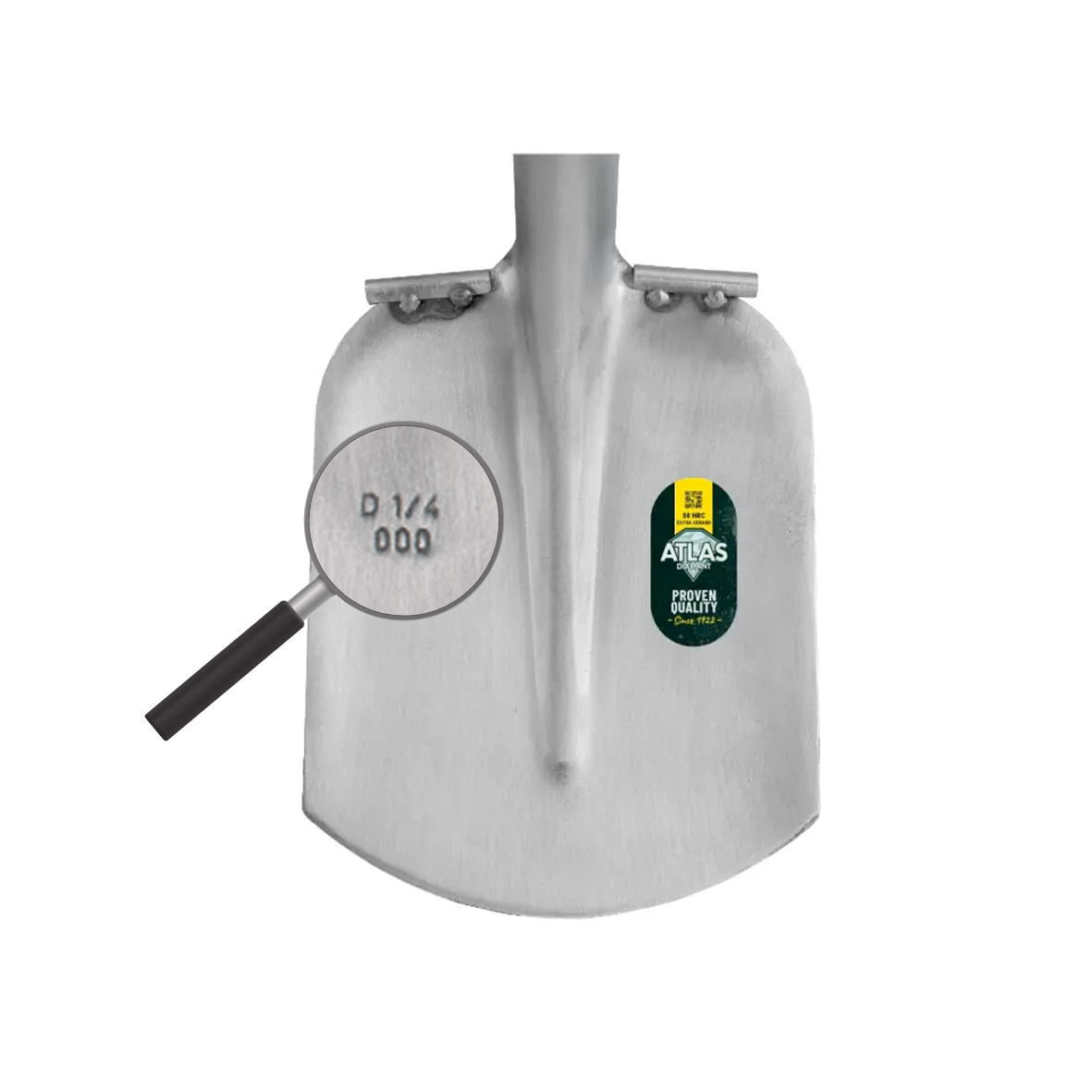
The stamp, code, or size marking on the blade of a shovel or spade indicates the socket angle* and blade width. Based on the stamp, it can be determined what kind of shovel or spade it is and which tasks it is most suitable for.
The ‘D’ with the number 1/4, 1/2, or 3/4 stands for the socket angle. In other words, how high the socket is bent upward. The higher the socket angle, the more slanted the socket is. This determines whether a shovel or spade is designed for digging or scooping.
The zeros indicate the blade width. The more zeros, the narrower the blade. So ‘000’ is narrower than ‘0’. The zeros in the blade therefore do not indicate the hardness of the steel, as is sometimes thought.
*The socket is the round sleeve into which the handle is mounted. The socket is also called the handle connection.
Socket angle of shovels and spades
The socket angle indicates the angle relative to the blade. The higher the socket angle, the more slanted the socket is. This determines whether a shovel or spade is designed for digging or scooping. The socket angle is measured from the ground to the socket when the blade is lying flat on the ground.
The socket angles are 1/4, 1/2, and 3/4. For an almost completely straight socket angle, no number is stated in the stamp.
It is important to choose a handle that matches the socket angle, depending on the application. The bend of the handle also helps determine how flat or straight the blade lies on the ground during use.
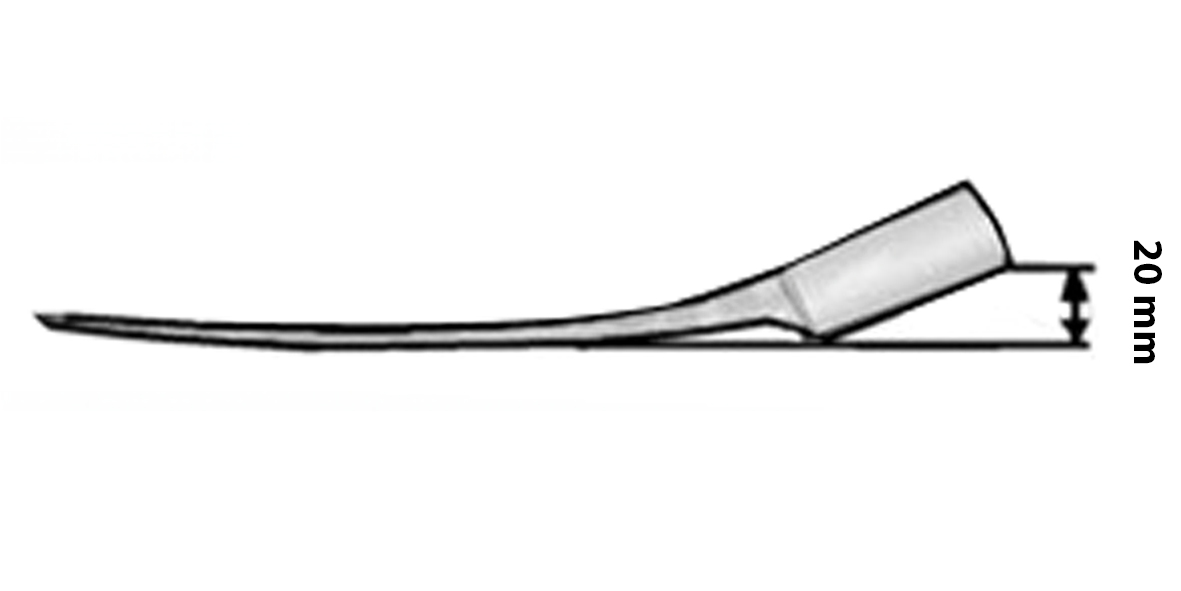
Straight
Specific to digging shovels
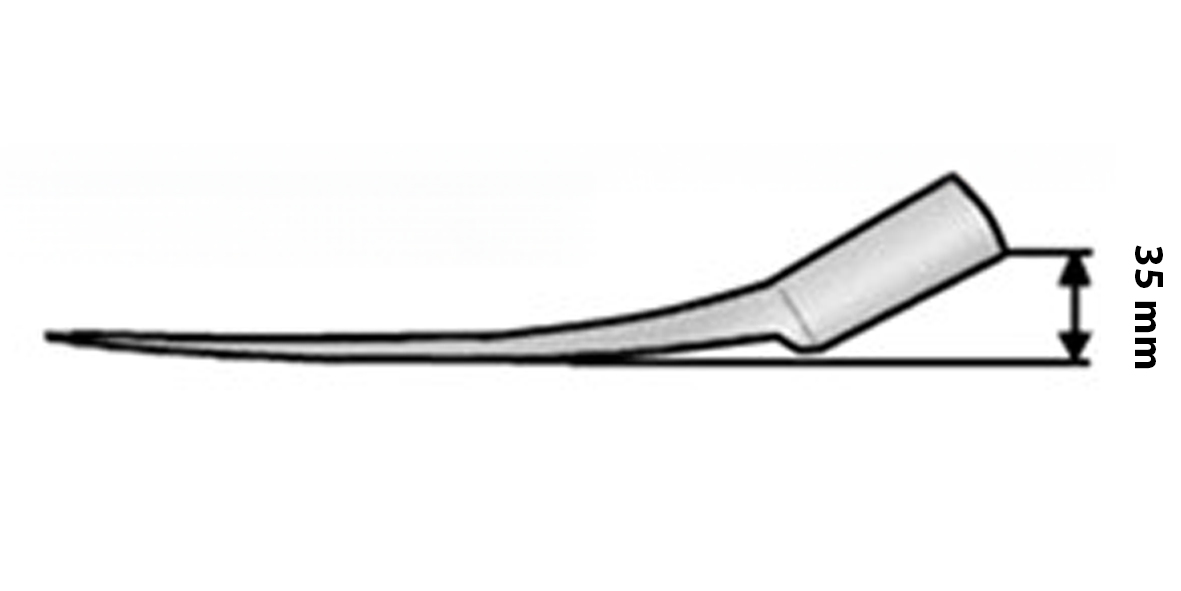
1/4
Specific to digging shovels
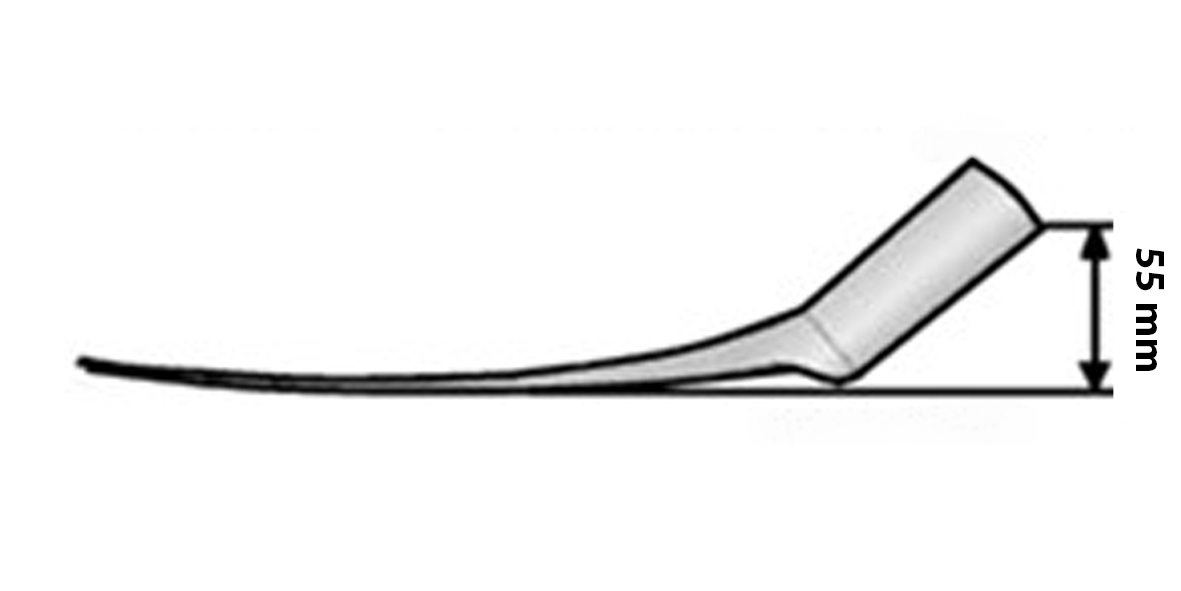
1/2
For scoop shovels, concrete shovels and screeding shovels
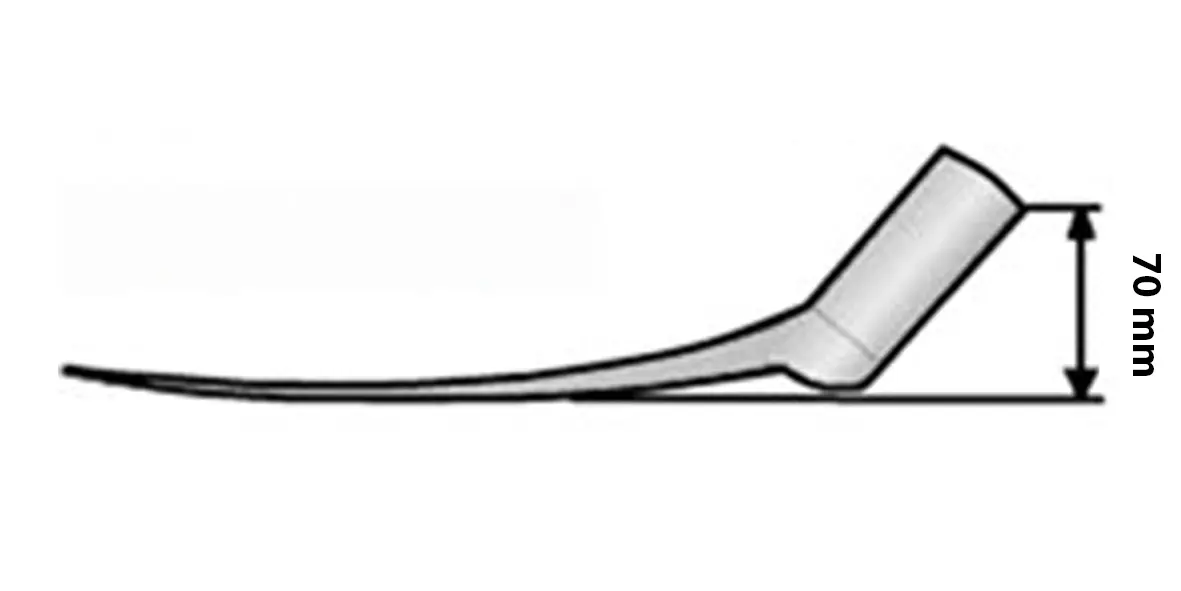
3/4
For scoop shovels and cable shovels
Blade width of shovels and spades
In the past, there were blade widths ranging from number 2 to 0, with 2 being the largest. Over time, the blades had to become smaller due to working conditions, and smaller sizes were introduced. It is sometimes thought that the zeros indicate the hardness of the blade, but this is not the case.
The blade sizes for shovels and spades, from large to small, are: 2 – 1 – 0 – 00 – 000
There are exceptions when it comes to indicating blade width. The Frankfurter model shovel has a blade width of no less than 5. It is therefore extra wide. Cable shovels are very narrow. Here, the blade width is indicated in centimeters.
Scoop shovel
Blade width of 0, 00, 1, or 2
Socket angle bent upward 1/2 or 3/4
Concrete shovel
Blade width of 0, 1, or 2
Socket angle bent upward 1/2 or 3/4
Cable shovel
Blade width 10, 11.5, 14 or 16 cm
Socket angle bent upward 1/2 or 3/4
Frankfurter
Blade width 5
Socket angle bent upward 3/4
Digging shovel
A digging shovel or Drents model shovel is straight and flat with a flat edge. A digging shovel is intended for all-around digging, ground stakes, and possibly scooping. The socket is fairly straight and usually has a socket angle bent upward 1/4. A digging shovel often has a slightly bent or bent shovel handle, allowing fairly straight digging into the ground. Scooping is also possible with a digging shovel. To scoop (potting) soil, sand, and gravel cleanly off the ground, a scoop shovel is more convenient. A digging shovel is also called a pan shovel, or in Brabant dialect, a 'Panneke'.
Most digging shovels have a socket angle bent upward 1/4. The blade is then in an ideal position for digging and excavation. Some digging shovels are made with an almost completely straight socket angle. Due to the extremely straight position of the blade, this is especially useful for digging.
Blade width 000 is a commonly used size for digging shovels. In addition, width 00 is also quite common. Wider blades are mainly found on scoop shovels and sand shovels. Narrower blades are more common on a cable shovel.
Professional users and true DIYers like to use a polished digging shovel. After all, soil and sand stick less easily to a polished blade, and the blade "cuts" more smoothly through the ground.
A digging shovel with step (shoulder strip) is often chosen. In this case, there is a round or flat strip on the rounded upper side of the blade (the shoulders). This provides extra grip and protects footwear from damage while digging.
Which handle fits a digging shovel?
Almost all shovel handles and shovel handles fit a digging shovel. A slightly bent to bent ash wood shovel handle with through-mount T-grip is the most ideal. These bent handles, in combination with the socket angle, provide a perfect angle and the most ergonomic working posture possible. Most people choose a shovel handle with a length of 110 cm. But lengths of 100 cm, 120 cm, and 130 cm are also popular.
Almost all digging shovels are supplied with and without a handle.