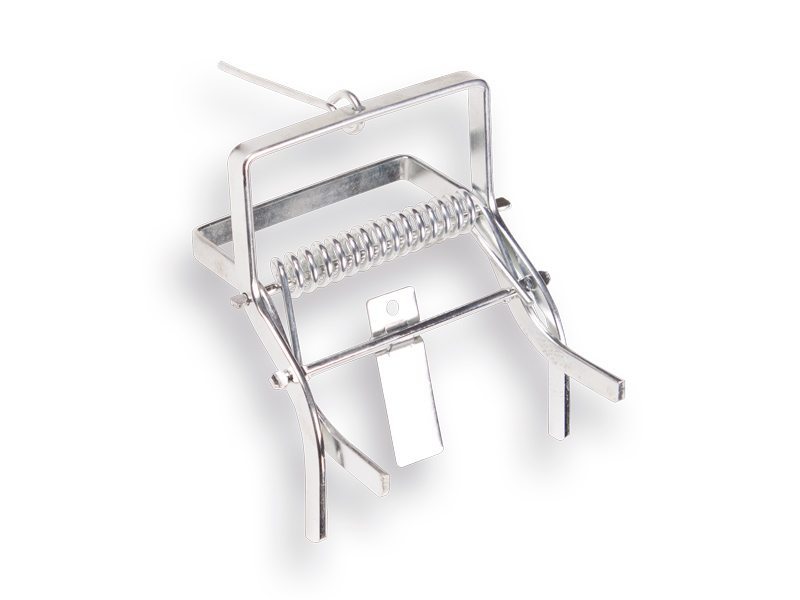
VoleX galvanised mole trap, rectangular model without handle.
Moles first create a so-called ring tunnel around the plot. The mole keeps using this tunnel to move around. From the ring tunnel, the mole makes runs in different directions, allowing it to move further into the plot. The mole will regularly use these runs, which makes this a suitable place to set a mole trap. You can check whether a run is in use by pressing it closed and checking the next day whether the mole has reopened it.
Place the mole trap in a straight section of tunnel, as close to the ring tunnel as possible when feasible. Are the tunnels too deep? Then place the trap in the ring tunnel.
Carefully open the tunnel and then remove all loose soil. Place the trap in the opening and check whether it can close easily. Then set the mole trap and place it in the tunnel. If necessary, test whether the trap can close easily.
Always place the set trap with the adjustment pin on the top, angled in the tunnel so that the adjustment plate is at an angle of about 135 degrees. Close the opening by sprinkling some loose soil between the trap and cover the whole thing with, for example, pieces of turf or leaves.
Check the mole trap daily! Remove a trapped mole as soon as possible and always reset the trap immediately. This is because the tunnels are often used by multiple moles. No mole caught after three days? Then the tunnel is almost certainly no longer in use. Check other tunnels for activity and move the trap to a tunnel that is still being visited. Always clean the mole trap thoroughly after use with a stiff brush and store it dry.
Moles have a very keen sense of smell, so it is wise to wear gloves when handling and placing mole traps. In general, a plot has a maximum of 15 moles per hectare. In some cases, this can even rise to 25 to 30 moles.
Suggested retail price € 6.95
Te koop bij uw lokale vakhandel of online
We use cookies to provide you a better user experience on this website. Cookie Policy