
How do you set a mole trap?
A mole is a useful animal that eats, for example, grubs, slugs, and crane fly larvae. However, a mole’s digging is often unwanted and troublesome.
How do you set a mole trap?
Read on to learn more about mole traps.
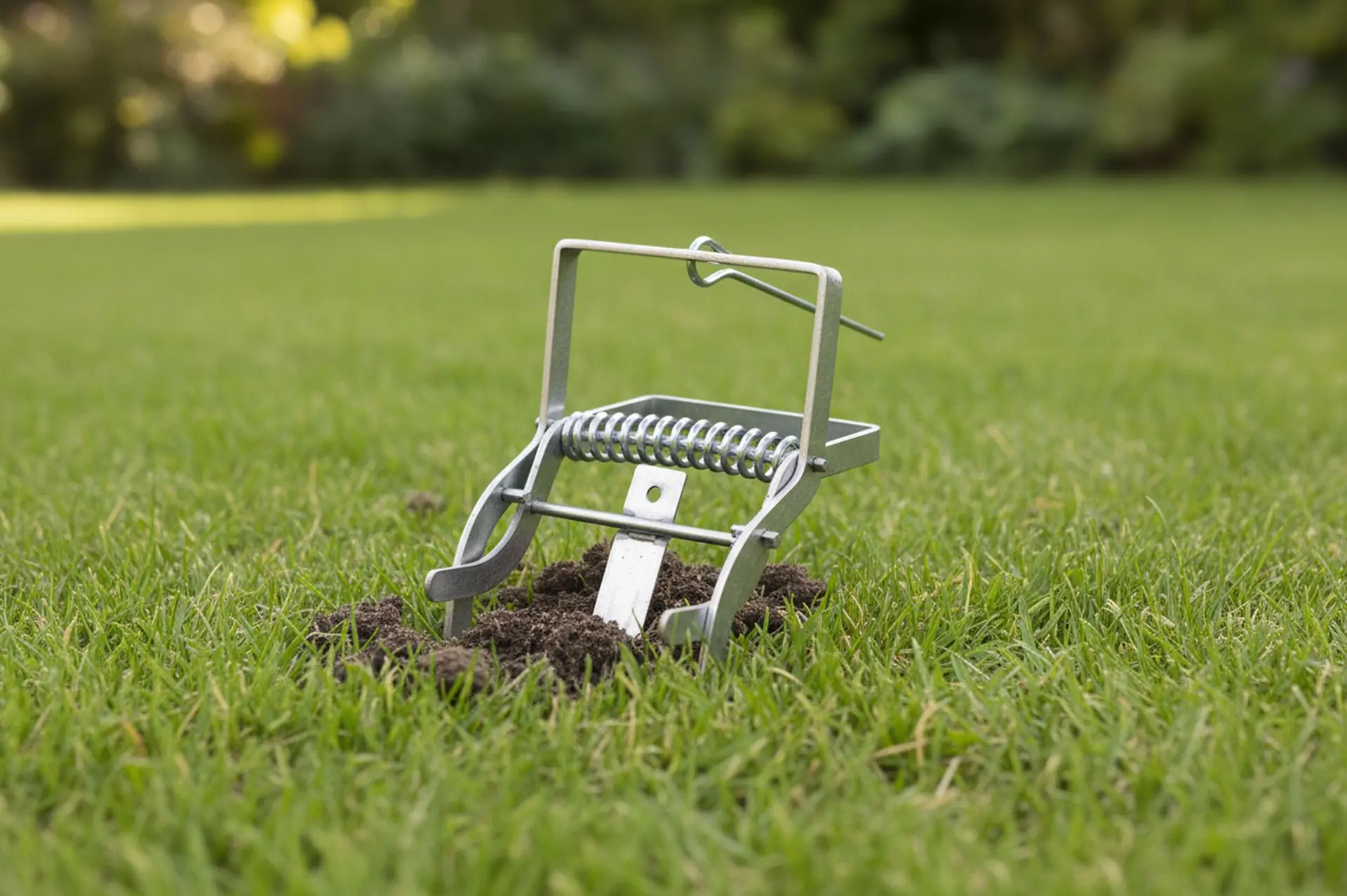
Setting a mole trap
Where do you place a mole trap?
Moles first make a so-called circular tunnel around the plot. The mole keeps using this tunnel to move around. From the circular tunnel, the mole makes passageways in different directions, allowing it to move farther into the plot.
The mole will use the passageways regularly, so this is a suitable place to place a mole trap. You can check whether a passageway is in use by carefully pressing it closed and checking the next day whether the mole has opened it again.
Place the mole trap in a straight section of passageway, preferably as close to the circular tunnel as possible. Are the passageways too deep? Then place the trap in the circular tunnel.
How do you set a mole trap?
Carefully open the tunnel and then remove all loose soil. Place the mole trap in the opening and check whether it can snap shut easily. Then set the mole trap and place it in the tunnel. If necessary, test whether the trap can snap shut easily.
Always place the set trap with the adjustment pin on the top side, at an angle in the tunnel so that the trigger plate is positioned at an angle of about 135 degrees. Close the opening by sprinkling some loose soil between the trap and cover the whole thing with, for example, pieces of sod or leaves.
When do you remove a mole trap?
Check the mole trap daily! Remove a caught mole as soon as possible and always put the trap back immediately. This is because the tunnels are often used by multiple moles. Still no mole caught after three days? Then the tunnel is almost certainly no longer in use. Check other tunnels for activity and move the trap to a tunnel that is still being visited.
In general, there are a maximum of 15 moles per hectare on a plot. In some cases, this can even increase to 25 to 30 moles.
More about the mole trap
Are you going to set a mole trap? This is useful to know:
Moles have a very keen sense of smell, so it is wise to wear gloves while handling and placing mole traps. This makes it less likely for a mole to smell human scent.
Do not flatten molehills, so you can see which ones are fresh and active. The soil of an active molehill is crumbly and is usually revisited within 1 to 2 days.
If a mole notices that its tunnel has been disturbed, it will no longer use it. So make sure no light gets in and that the tunnel is neatly clean and well covered.
Mole traps snap shut hard. Keep pets and children in mind and make sure they cannot touch the trap.
Always clean the mole trap thoroughly after use with a stiff brush and store it in a dry place. This will make it last longer and keep it ready for next time.
Different mole traps:

Rectangular model

With handle

With trigger plate
Who is the mole?
Nuisance caused by moles
A mole digs tunnels and makes molehills in lawns, sports fields, and pastures. Grass roots become damaged, causing grass plants to die. The ground sinks, increasing the risk of injury to both people and livestock (a foot or hoof can get stuck in a tunnel). In lawns, appearance and enjoyment are reduced. On sports fields, mole tunnels can make playing difficult or impossible. In addition, the loosened soil promotes weed growth.
In short, a mole causes nuisance. Still, a mole also has its good sides and is a useful animal.
Why is a mole useful?
A mole eats large quantities of harmful insects and larvae such as grubs, crane fly larvae, wireworms, beetles, and also slugs. Every day, they even eat their own body weight in insects.
By digging, a mole aerates the soil. The soil is better drained and less compacted, allowing excess rainwater to drain away easily. This contributes to a better soil structure and good soil condition.
Where there is a mole, there is a lot of soil life. A mole is therefore actually an indicator of healthy soil. The many insects and larvae it needs for its daily diet are a sign of rich soil life.
